
Introduction
Food packaging plays an important role in protecting food, maintaining hygiene, and making takeaway and delivery convenient. However, growing concerns about plastic waste are encouraging businesses to explore more sustainable alternatives.
One of the materials gaining attention is sugarcane bagasse packaging.
Bagasse is the fibrous material left after sugarcane is processed for juice or sugar. Instead of treating this material simply as waste, it can be used to manufacture a variety of food packaging products.
For restaurants, cafés, cloud kitchens, caterers, food manufacturers, and takeaway businesses, eco-friendly food packaging can be an opportunity to reduce dependence on conventional packaging while presenting a more sustainability-focused brand image.
At Green Cane Pack, our approach is simple: From Nature. For the Future.
What Is Sugarcane Bagasse Packaging?
Sugarcane bagasse packaging is made using the fibrous residue left after extracting juice from sugarcane.
This agricultural by-product can be processed and moulded into different types of food-service products, including containers, plates, bowls, and takeaway packaging.
The basic idea is to give an agricultural by-product another useful application instead of relying entirely on conventional packaging materials.
If you are new to sustainable packaging, explore the Green Cane Pack About Us section to learn more about our approach to eco-conscious packaging.
Why Is Bagasse Becoming Popular for Food Packaging?
The demand for sustainable food packaging is increasing as businesses and consumers become more conscious of packaging waste.
Here are some important reasons why bagasse is attracting attention.
1. Made From Sugarcane Waste
One of the most interesting characteristics of bagasse is its origin.
Sugarcane processing produces a large amount of fibrous residue. Bagasse packaging gives this material another practical application by turning it into useful food-service products.
This creates an interesting connection between agriculture and sustainable packaging: sugarcane waste can become a useful packaging material.
2. Suitable for Different Food-Service Applications
Bagasse can be moulded into different shapes and sizes, making it useful for many food-service applications.
Depending on the product specification, bagasse packaging can be used for:
- Takeaway meals
- Restaurant food
- Catering
- Events
- Cloud kitchens
- Cafés
- Food delivery
- Snacks and desserts
Businesses can explore the Green Cane Pack Product section to see the available packaging solutions.
3. A More Sustainable Alternative to Conventional Packaging
Traditional packaging choices can create challenges at the end of their useful life, particularly when they are made from materials that persist in the environment.
Businesses looking for eco-friendly packaging products are therefore exploring renewable or alternative materials such as bagasse.
However, sustainability depends on the complete product life cycle, including how a product is manufactured, used, collected, and disposed of.
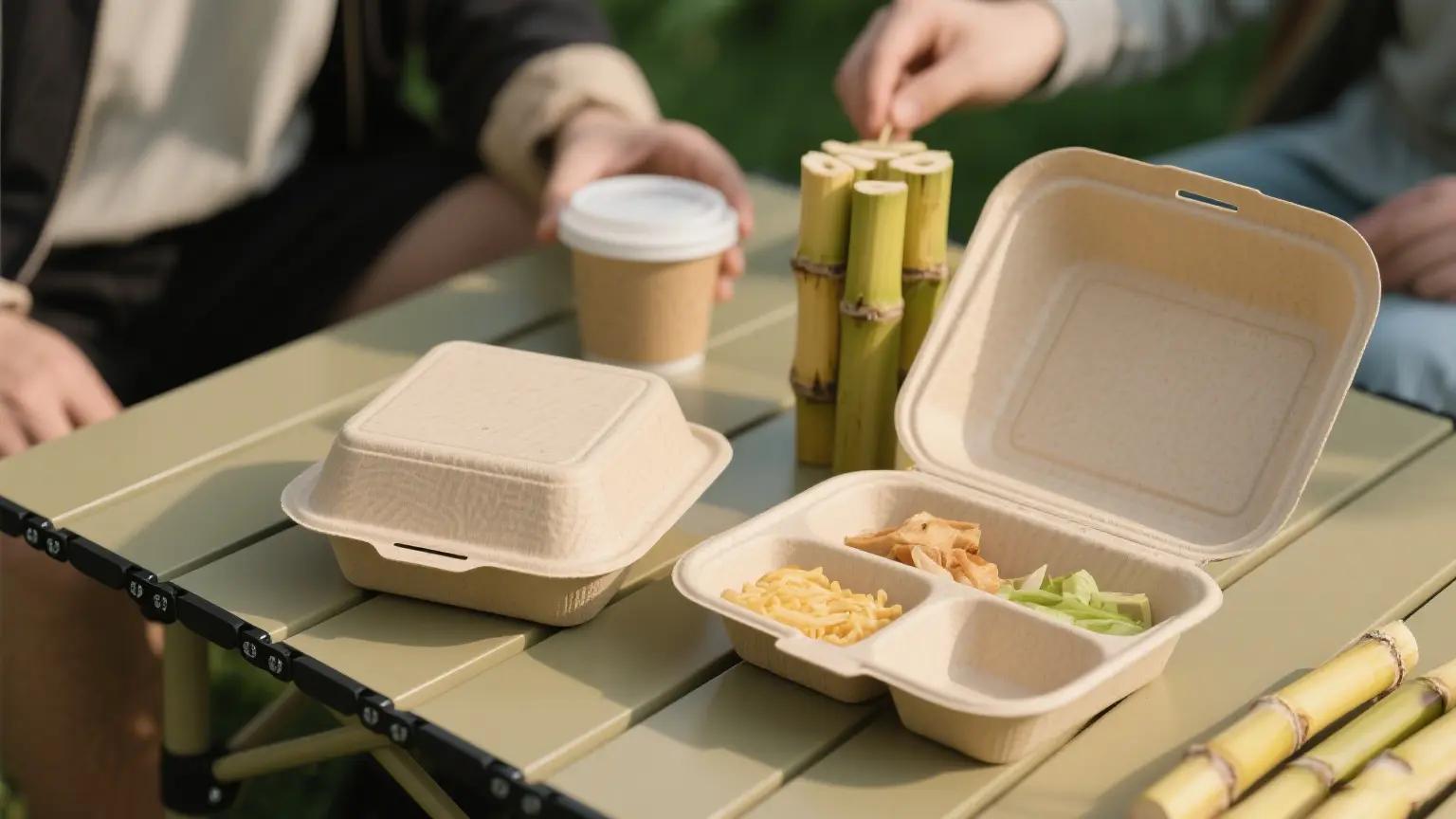
Bagasse Food Containers vs Conventional Plastic Packaging
When choosing packaging, businesses should consider more than appearance and price.
| Feature | Bagasse Packaging | Conventional Plastic Packaging |
|---|---|---|
| Main material | Sugarcane fibre | Petroleum-derived polymers |
| Renewable feedstock | Yes, sugarcane residue | Generally no |
| Common applications | Food containers, plates, bowls | Containers, trays, cups |
| Sustainability positioning | Strong | Depends on material and disposal |
| End-of-life considerations | Depends on product and local facilities | Depends on polymer and recycling system |
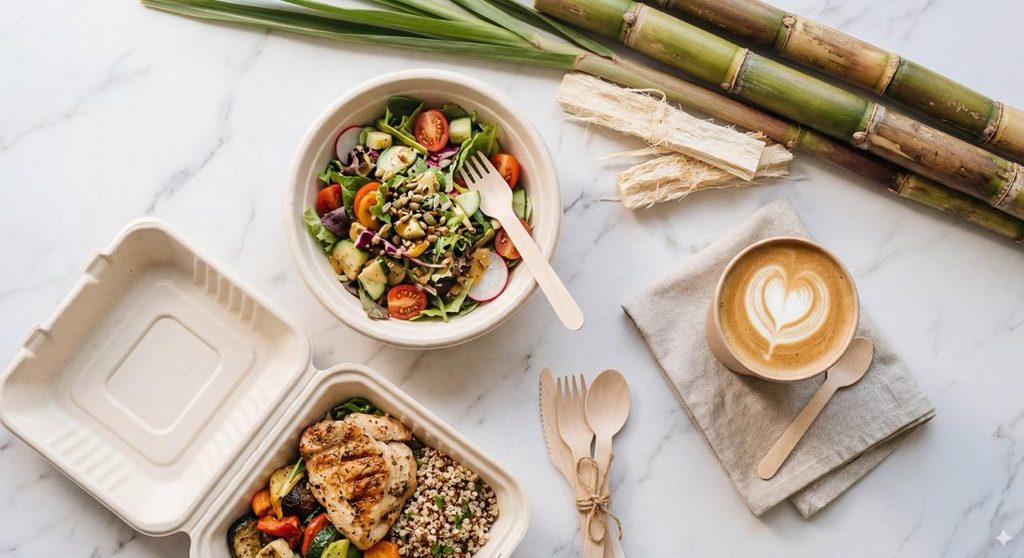
Benefits of Sugarcane Bagasse Packaging
Renewable Material Source
Sugarcane is an agricultural crop, and bagasse is generated during sugarcane processing. Using this residue as a raw material can create an additional use for an existing agricultural resource.
Practical Food-Service Packaging
Bagasse can be formed into containers, plates, and bowls designed for food-service applications.
Natural Appearance
The natural appearance of bagasse packaging can complement brands that want their packaging to communicate a more environmentally conscious identity.
Supports Sustainable Brand Positioning
Packaging is often one of the first physical touchpoints between a food business and its customer.
Using thoughtfully selected sustainable packaging solutions can help businesses communicate that sustainability is part of their brand values.